
Recent Work
Lifestyle
Features
Digital Products
Culture
September 2026
Is AI Replacing E-commerce Photography?
Is AI Replacing E-commerce Photography?
How brands with hundreds of SKUs and too few in-situ images can keep up with e-commerce content demand.



More imagery, one visual point of view.
There is a catch to making images faster: a brand can suddenly have dozens of attractive interiors that seem to belong to dozens of different companies. One feels like a spa, another like a property listing, another like a luxury hotel. The volume is there, but the identity has disappeared.
That is why we establish the art direction before expanding the image set. Light, materials, colour, framing and the amount of life in a scene become choices we can return to. Each product and campaign gets room to be different, while the collection still feels recognisably from the same brand.
And then there is the detail that cannot be improvised: the product itself. An AI-generated interior can be persuasive at a glance and wrong on closer inspection—a changed handle, a shortened fixture, a finish that no longer catches the light. We check the image against the approved SKU, refine it or composite the real product where needed. When photography or 3D gives a more faithful result, we use it.
So is AI replacing e-commerce photography? The product shoot still has a vital job: showing people exactly what they can buy. AI gives brands another way to build the imagery around that truth—more products shown in context, more distinct campaigns, and a visual presence that can keep pace with the store.


A different offer deserves a different image
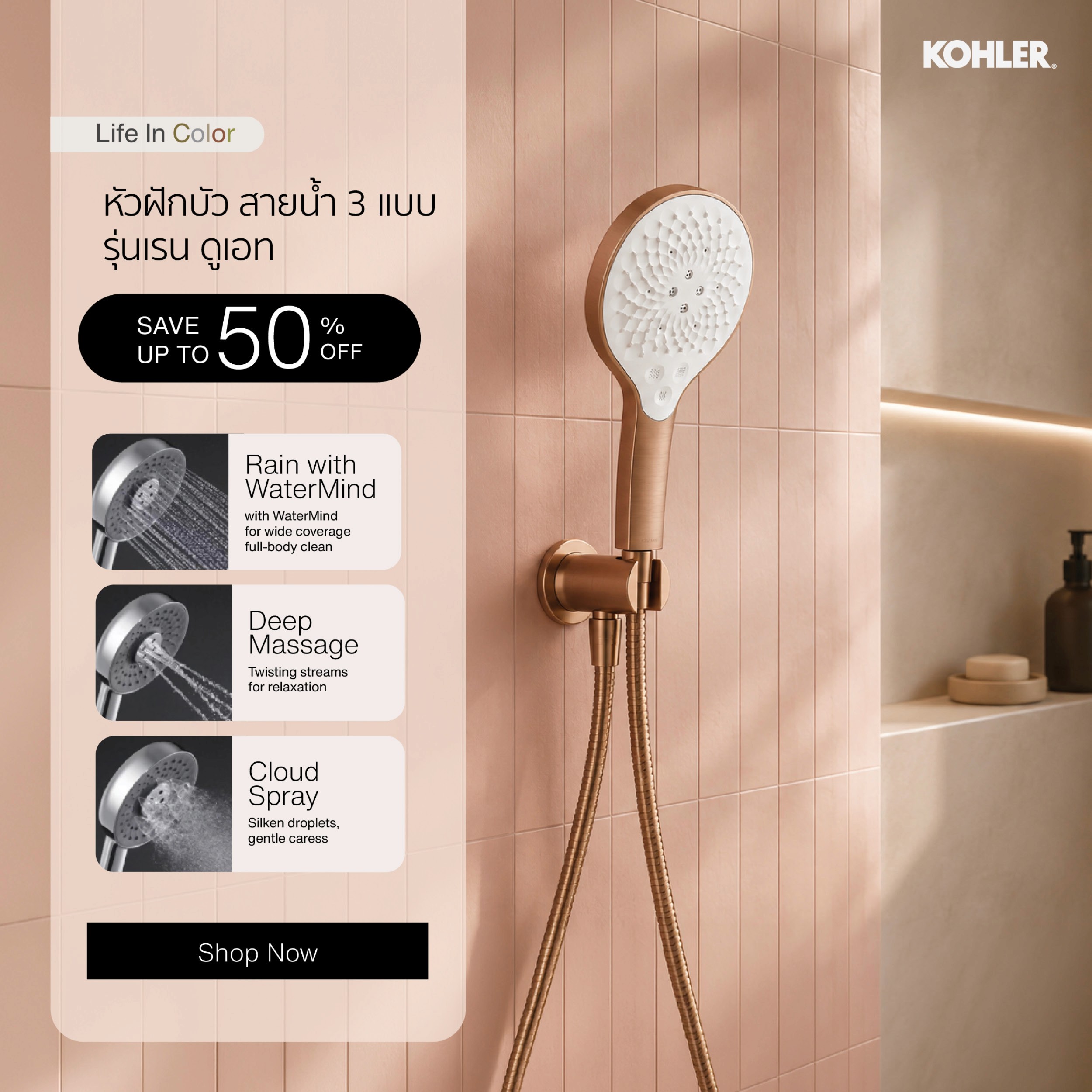
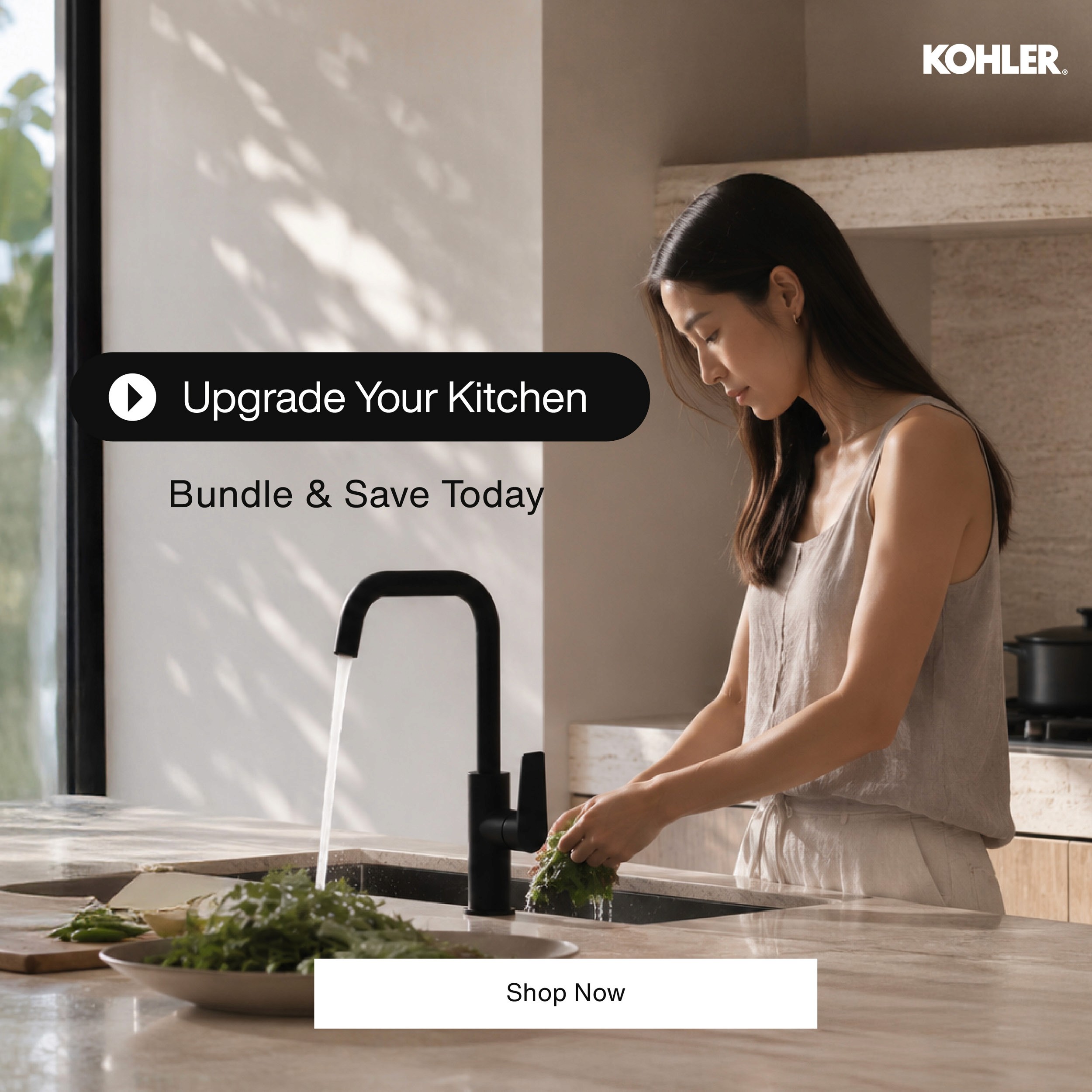
An e-commerce calendar asks the same assets to do an astonishing number of jobs. A new collection needs discovery. A bundle needs its products to make sense together. A seasonal offer needs to feel timely. When all three inherit the same bathroom image, the change in message is easy to miss.
We develop imagery around the reason for each offer, then compose it for where it will appear. A homepage can make space for a headline; a category banner can bring the relevant products forward; a mobile crop can keep the hero item in view. This creates variety across the calendar without requiring a new physical set for every promotion.




How brands with hundreds of SKUs and too few in-situ images can keep up with e-commerce content demand.
A different offer deserves a different image
An e-commerce calendar asks the same assets to do an astonishing number of jobs. A new collection needs discovery. A bundle needs its products to make sense together. A seasonal offer needs to feel timely. When all three inherit the same bathroom image, the change in message is easy to miss.
We develop imagery around the reason for each offer, then compose it for where it will appear. A homepage can make space for a headline; a category banner can bring the relevant products forward; a mobile crop can keep the hero item in view. This creates variety across the calendar without requiring a new physical set for every promotion.
More imagery, one visual point of view.
There is a catch to making images faster: a brand can suddenly have dozens of attractive interiors that seem to belong to dozens of different companies. One feels like a spa, another like a property listing, another like a luxury hotel. The volume is there, but the identity has disappeared.
That is why we establish the art direction before expanding the image set. Light, materials, colour, framing and the amount of life in a scene become choices we can return to. Each product and campaign gets room to be different, while the collection still feels recognisably from the same brand.
And then there is the detail that cannot be improvised: the product itself. An AI-generated interior can be persuasive at a glance and wrong on closer inspection—a changed handle, a shortened fixture, a finish that no longer catches the light. We check the image against the approved SKU, refine it or composite the real product where needed. When photography or 3D gives a more faithful result, we use it.
So is AI replacing e-commerce photography? The product shoot still has a vital job: showing people exactly what they can buy. AI gives brands another way to build the imagery around that truth—more products shown in context, more distinct campaigns, and a visual presence that can keep pace with the store.
Is AI Replacing E-commerce Photography?
Lifestyle
Features
Digital Products
Culture
Recent Work
September 2026
Is AI Replacing E-commerce Photography?
Lifestyle
Features
Digital Products
Culture
Recent Work
September 2026
How brands with hundreds of SKUs and too few in-situ images can keep up with e-commerce content demand.
A different offer deserves a different image
An e-commerce calendar asks the same assets to do an astonishing number of jobs. A new collection needs discovery. A bundle needs its products to make sense together. A seasonal offer needs to feel timely. When all three inherit the same bathroom image, the change in message is easy to miss.
We develop imagery around the reason for each offer, then compose it for where it will appear. A homepage can make space for a headline; a category banner can bring the relevant products forward; a mobile crop can keep the hero item in view. This creates variety across the calendar without requiring a new physical set for every promotion.
More imagery, one visual point of view.
There is a catch to making images faster: a brand can suddenly have dozens of attractive interiors that seem to belong to dozens of different companies. One feels like a spa, another like a property listing, another like a luxury hotel. The volume is there, but the identity has disappeared.
That is why we establish the art direction before expanding the image set. Light, materials, colour, framing and the amount of life in a scene become choices we can return to. Each product and campaign gets room to be different, while the collection still feels recognisably from the same brand.
And then there is the detail that cannot be improvised: the product itself. An AI-generated interior can be persuasive at a glance and wrong on closer inspection—a changed handle, a shortened fixture, a finish that no longer catches the light. We check the image against the approved SKU, refine it or composite the real product where needed. When photography or 3D gives a more faithful result, we use it.
So is AI replacing e-commerce photography? The product shoot still has a vital job: showing people exactly what they can buy. AI gives brands another way to build the imagery around that truth—more products shown in context, more distinct campaigns, and a visual presence that can keep pace with the store.